

Common Compliance Mistakes in Aviation Warning Light Installation
Installing an aviation obstruction light might seem like a straightforward electrical job, but when you are dealing with skyscrapers, telecommunication towers, or industrial chimneys, the margin for error is zero.
A single compliance mistake doesn’t just lead to hefty fines; it puts lives at risk. Over the years at Instapower, we’ve seen many projects delayed or subjected to safety audits due to avoidable installation errors.
Here are the most common compliance mistakes we see in the field, along with how to avoid them.
1. Ignoring Photometric Requirements (The “Bright Enough” Myth)
One of the biggest mistakes is assuming that any red light is a “warning light.” International standards like ICAO (Annex 14) and FAA (AC 70/7460) define specific photometric requirements. This process includes the exact beam spread (vertical and horizontal) and the intensity (measured in Candelas).
Many installers use generic LED lights that scatter light in the wrong directions. If the light doesn’t meet the specific vertical beam profile, a pilot approaching from a certain angle might not see the tower until it’s too late.
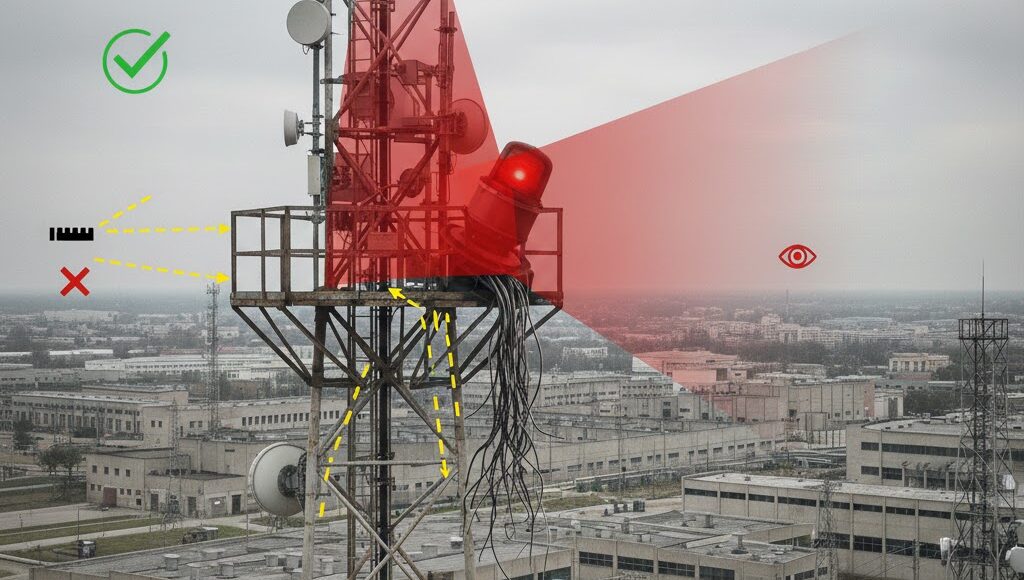
2. Incorrect Placement and “Shadowing.”
Compliance isn’t just about having a light; it’s about where you put it. A common error is placing the light unit too far below the top of the structure or behind an antenna. This process constructs a “shadow zone” where the light is invisible from certain flight paths.
According to ICAO guidelines, lights must be placed at the highest point and at specific intervals along the structure’s height (Levels). Skipping a level to save on costs is a direct violation of safety protocols.
3. Mixing Non-Certified Components
We often see sites where the light unit is high-quality, but the controller or photosensors are substandard. If your dusk-to-dawn sensor fails, your light won’t turn on when the lux level drops.
To combat this, Instapower provides integrated systems. Our FAA- and ICAO-certified aviation warning lights are designed to operate as a synchronized ecosystem. When the system is certified as a whole, you eliminate the risk of “component friction” that leads to system failure.
4. Neglecting the IP Rating and Durability
Aviation lights live in the harshest environments—high-velocity winds, lightning, and extreme UV exposure. Using a light with an inadequate Ingress Protection (IP) rating leads to moisture buildup. Once water hits the internal circuitry, the LED driver fails. Compliance isn’t just for the day of inspection; the light must remain compliant for its entire 100,000-hour lifespan.
How Instapower is Solving the Compliance Gap
At Instapower, we don’t just ship a box of lights; we partner with the aviation and infrastructure sectors to ensure the job is done right.
Global Standards: We offer a comprehensive range of ICAO- and FAA-certified lights, ensuring your project meets international aviation safety standards wherever you are.
Technical Guidance: Our team helps engineers understand the “Type” of light needed—whether it’s Low Intensity Type A/B for smaller towers or Medium Intensity Type A/B for massive structures or high intensity type A/B.
Built for Extremes: From the salt-heavy air of coastal regions to the intense heat of the desert, our lights are engineered to stay bright and stay compliant without frequent maintenance.
Summary:
Compliance is a commitment to safety. By avoiding these common installation mistakes and choosing certified, high-performance hardware, you protect your assets and the people in the sky.
If you are planning an installation and want to ensure you are 100% compliant, then contact us today. Let’s make the skies safer, one tower at a time.

Leave a Comment